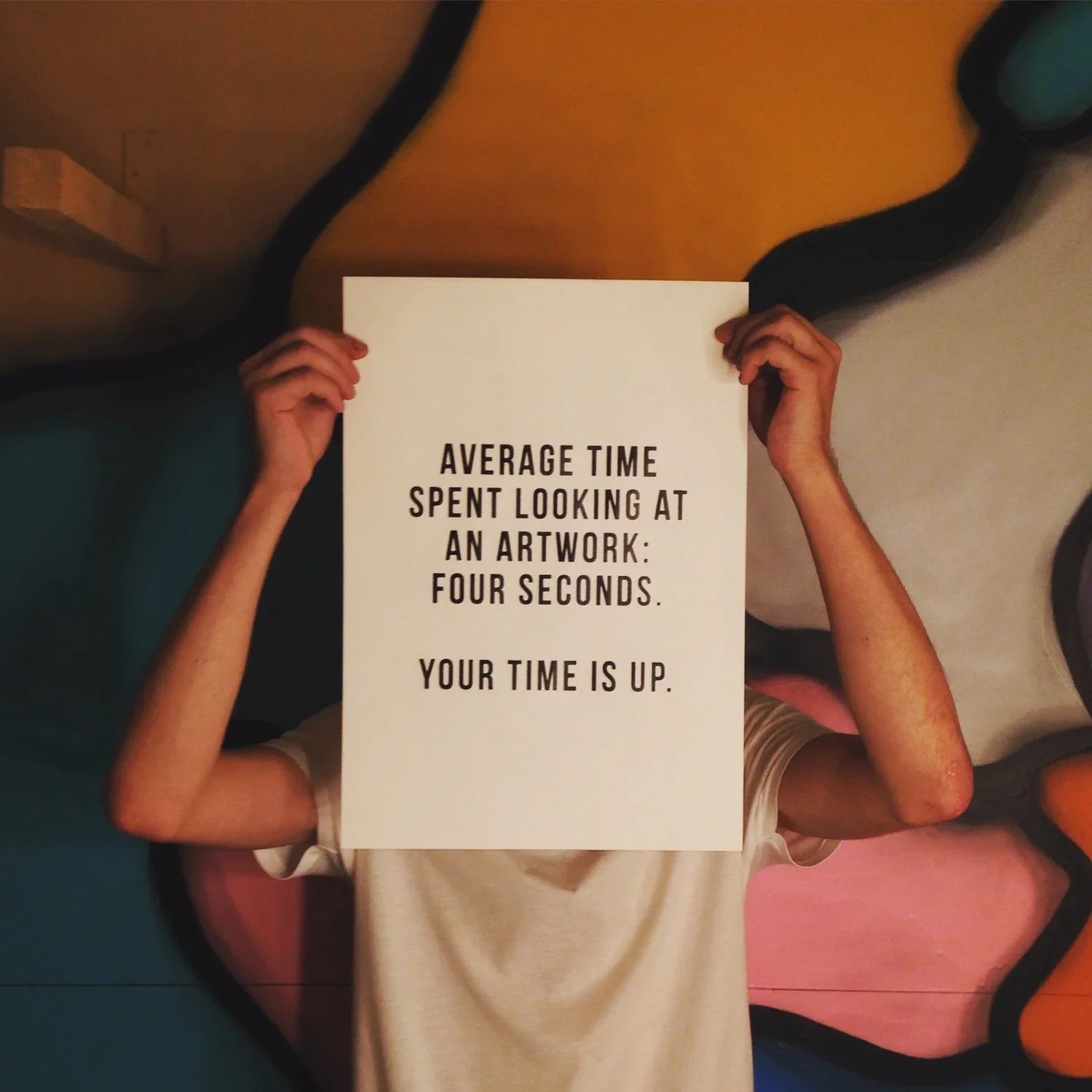
collage by the author
Benjamin Ives Gilman’s concept of “museum fatigue” (1916) offers a powerful metaphor. His observations that visitors physically strain to view objects because of poorly designed exhibition cases, remain tragically resonant. But today’s museums are not just badly designed: they have evolved into commercialized “cultural malls” gated by security systems, and shaped by the logic of spectacle rather than reflection. In Museum Fatigue, I argue that this exhaustion is not just physical but ideological & structural. It is tied to the legacy of colonialism (which shaped many of the objects museums hold) and the pressures of capitalist funding models (which influence how museums display, sponsor and restrict access).
When men die, they become history.
Once statues die, they become art.
This botany of death is what we call culture.

This statement from the film “Les Statues Meurent Aussi [ENG: Statues Also Die]” directed by Alain Resnais, Chris Marker, and Ghislaine Cloquet in 1953, exposes the production process of what we call culture that is visible in museums. Commissioned by the journal Présence Africaine and banned until 1960s by French authorities for being anticolonial, this visual essay reveals the impact of colonialism on museums. In the film, directors use the magic of cinema, by threating all the subjects in front of the lens without differentiating between humans, statues, environment, and architecture. It brings living and inanimate objects closer together. It questions what is alive and what is inanimate. This is the underlying problem of today's museums: could a dead object in a museum still be alive in the society it belongs to? As a museum worker, I liken today’s museums architecturally to shopping malls, structurally to cemeteries, and functionally to prisons.
Interior, the Humboldt Forum
Numbered artifacts, the Humboldt Forum
“The German word ‘museal’ [‘museumlike’] has unpleasant overtones. It describes objects to which the observer no longer has a vital relationship and which are in process of dying. They owe their preservation more to historical respect than to the needs of the present. Museum and mausoleum are connected by more than phonetic association. Museums are like the family sepulchers of works of art.”
Theodor W. Adorno, 1967
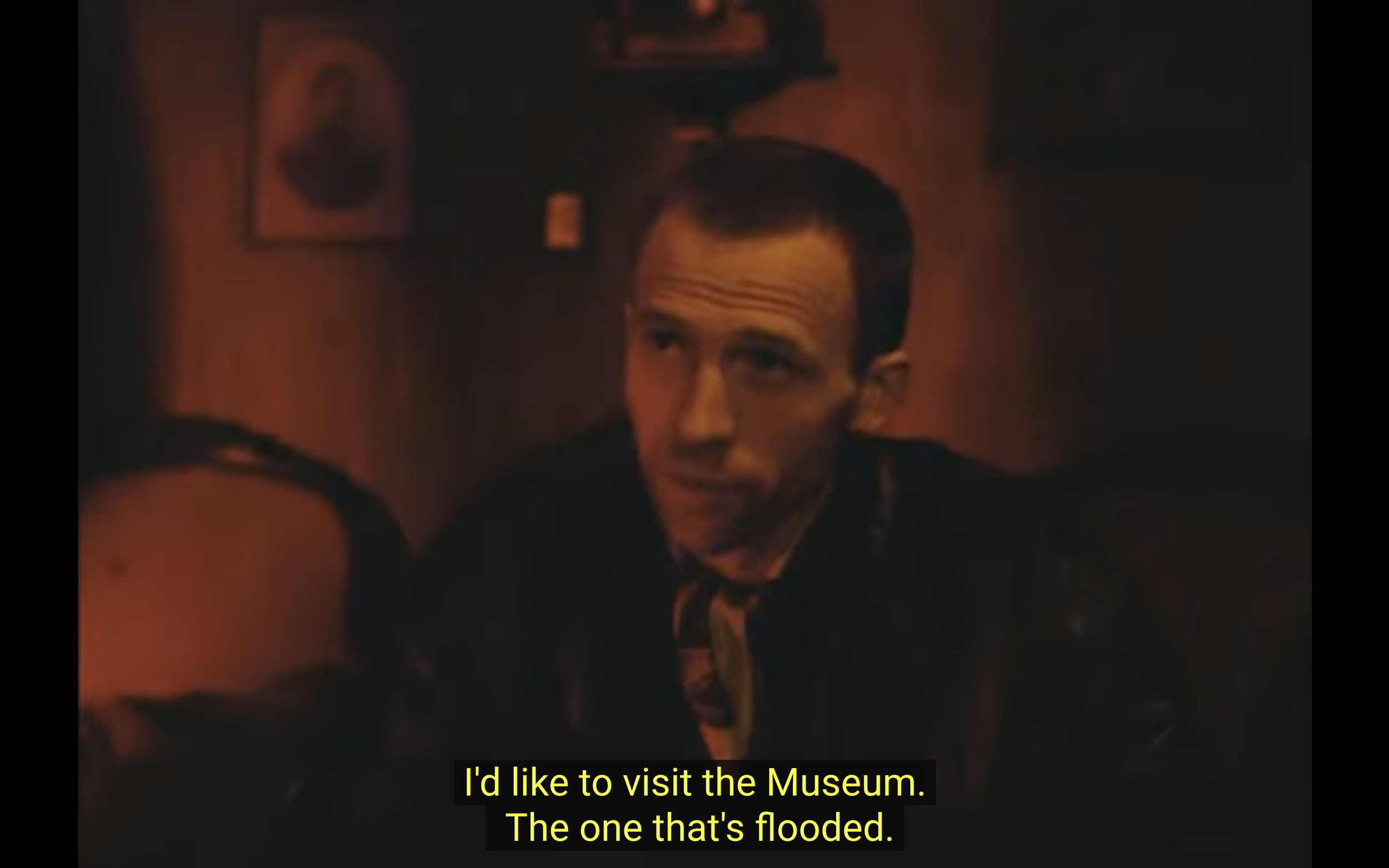
“The rules of any colonization”
from Battle: Los Angeles (2011)
screencast by the author
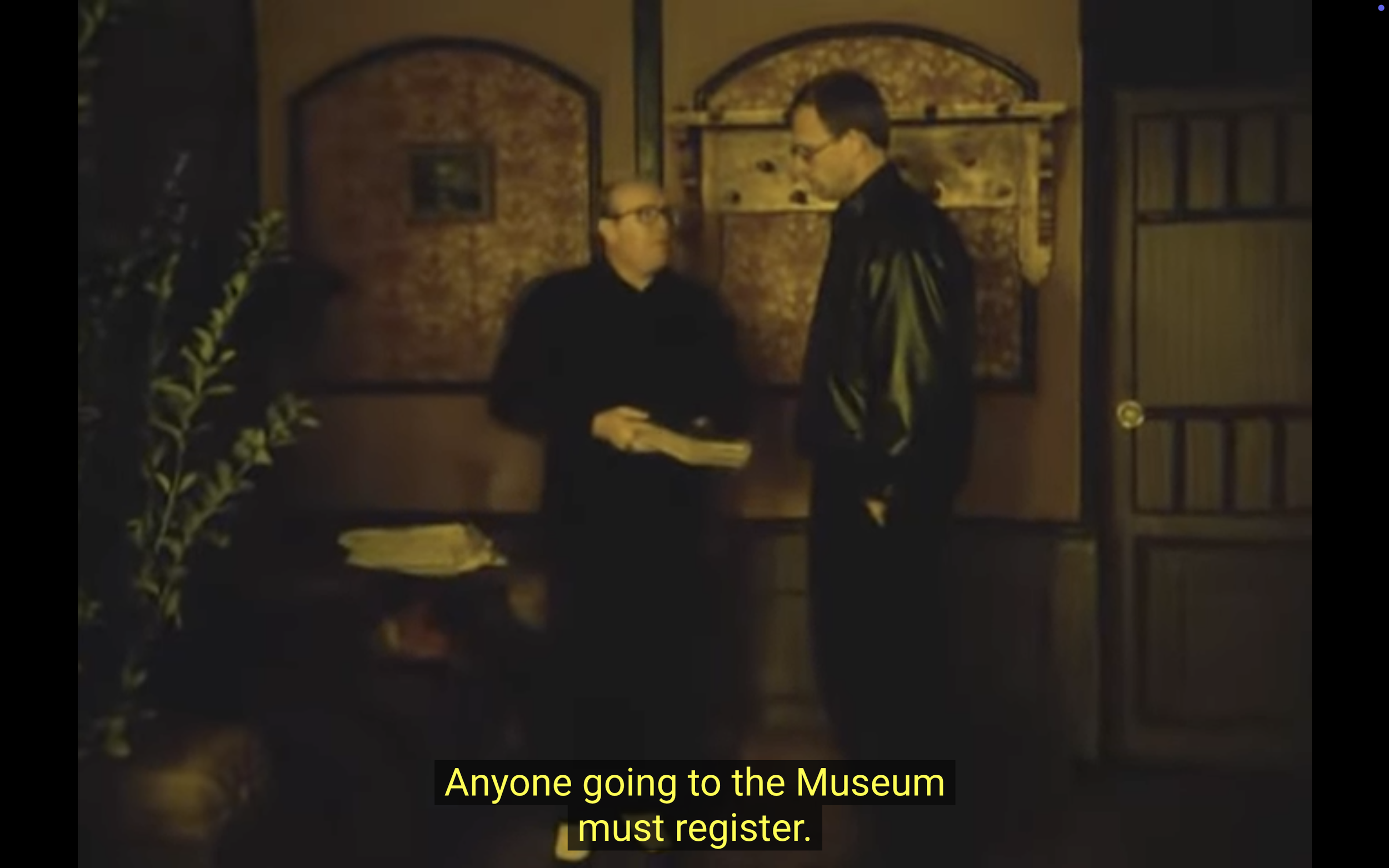
The Soviet film “Visitor of a Museum” (Konstantin Lopushansky, 1989) portrays a post-apocalyptic world shattered by an ecological disaster, where the remnants of humanity - both ‘mutants’ and the last survivors of an earlier civilization - struggle to endure. Its protagonist, one of the few who still thinks and looks human, attempts to reach a mysterious museum hidden deep beneath the sea and accessible only at low tide, an ‘ethnographic museum’ preserving the ruins of a lost world. Though framed as science fiction, its depiction of a distant, nearly unreachable museum echoes the growing disconnect between museums and the people who seek them today.
We don’t have to look only to science fiction to understand the estrangement surrounding museums today. Popular culture also offers its own sharp observations. The Simpsons, for instance, repeatedly turns museums into sites of boredom, misunderstanding, spectacle or empty civic pride, places that promise enlightenment but often fail to connect with the very public they claim to serve. These comedic portrayals, though exaggerated, capture something real: a sense that museums have become distant institutions, more inclined to perform cultural authority than to cultivate meaningful engagement.
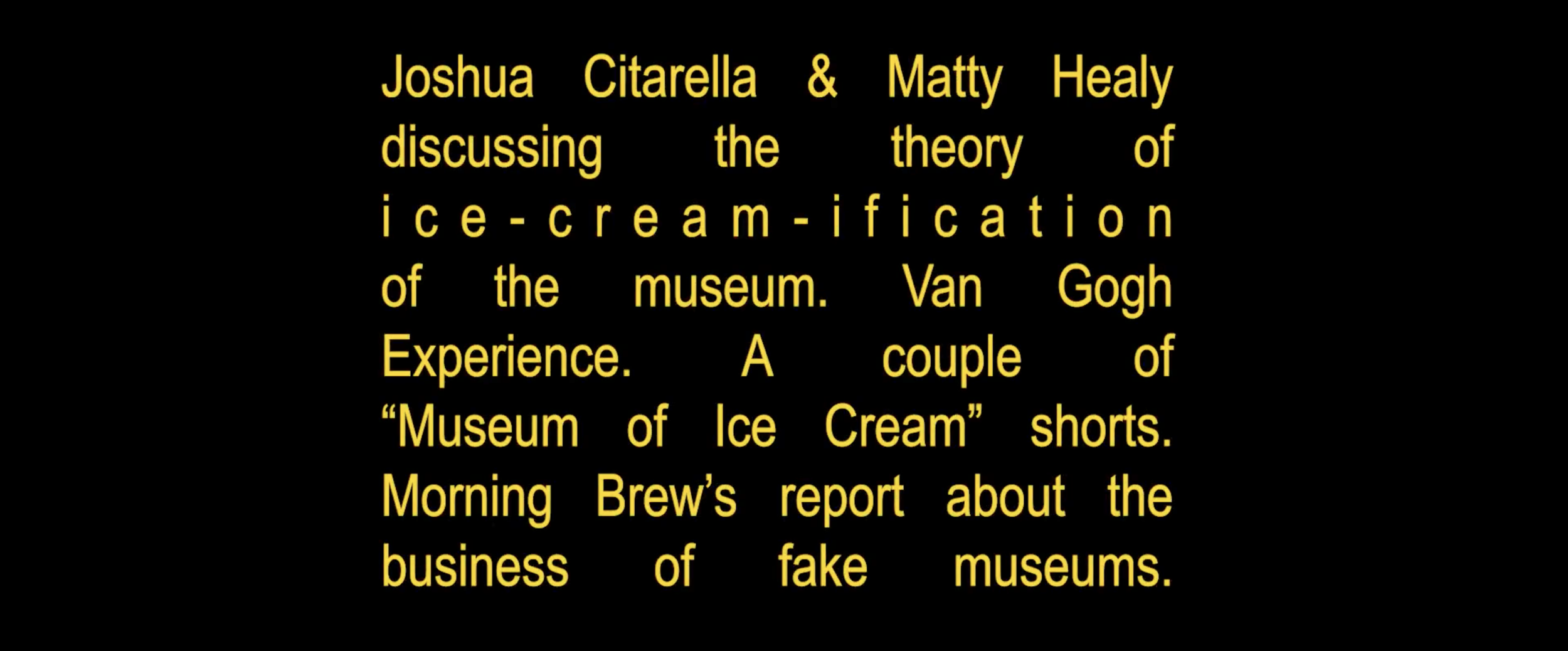
Before the recent ice-creamification of the museum, its transformation into a site of consumable, Instagram-ready spectacle, the institution had already undergone what can be called a profound McDonaldization. Long before museums were competing to become photogenic leisure destinations, they had begun adopting the logic of corporate franchising. The Guggenheim, particularly under the leadership of Thomas Krens, became the most emblematic example of this shift. Krens envisioned the museum not as a singular cultural institution rooted in a specific locality, but as a scalable brand, a reproducible model that could be exported globally.
This strategy led to the creation of multiple Guggenheim satellites, each functioning like a cultural franchise, visually iconic, marketable & aligned with the flows of global capital. The proposed project on Saadiyat Island in Abu Dhabi stands as the most recent and perhaps most extreme extension of this logic. Here, the museum becomes part of a master-planned cultural enclave built on immense financial investments, labor exploitation controversies, and the desire of states to reposition themselves through cultural capital. In this context, the museum no longer aspires merely to collect or curate; it becomes an instrument of soft power, urban branding & economic speculation.
The shift from McDonaldization to ice-creamification signals not a rupture but an evolution: from franchising as global expansion to the optimization of museums as sensory, affective commodities designed for fast consumption. The museum, once imagined as a space for contemplation, increasingly resembles a chain store of cultural experience: efficient, standardized, repeatable & ultimately governed by the imperatives of neoliberal capitalism & cultural imperialism.
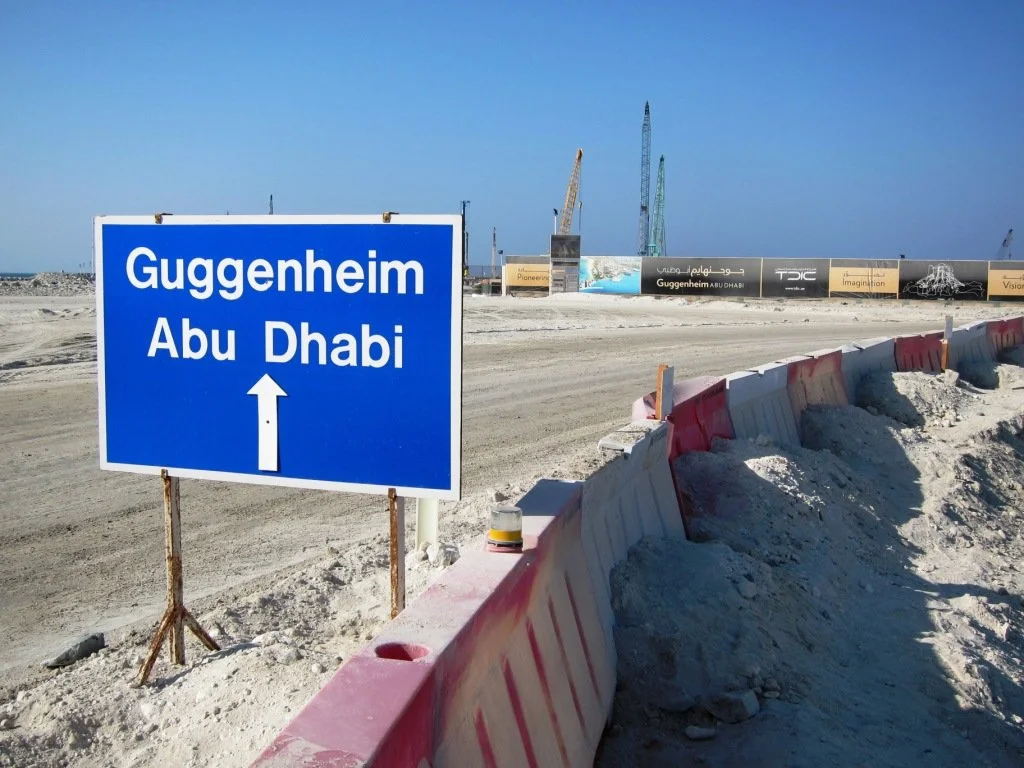
photo by Gulf Labor
Exit through the gift shop, the Humboldt Forum
Labelled artifacts, the Humboldt Forum
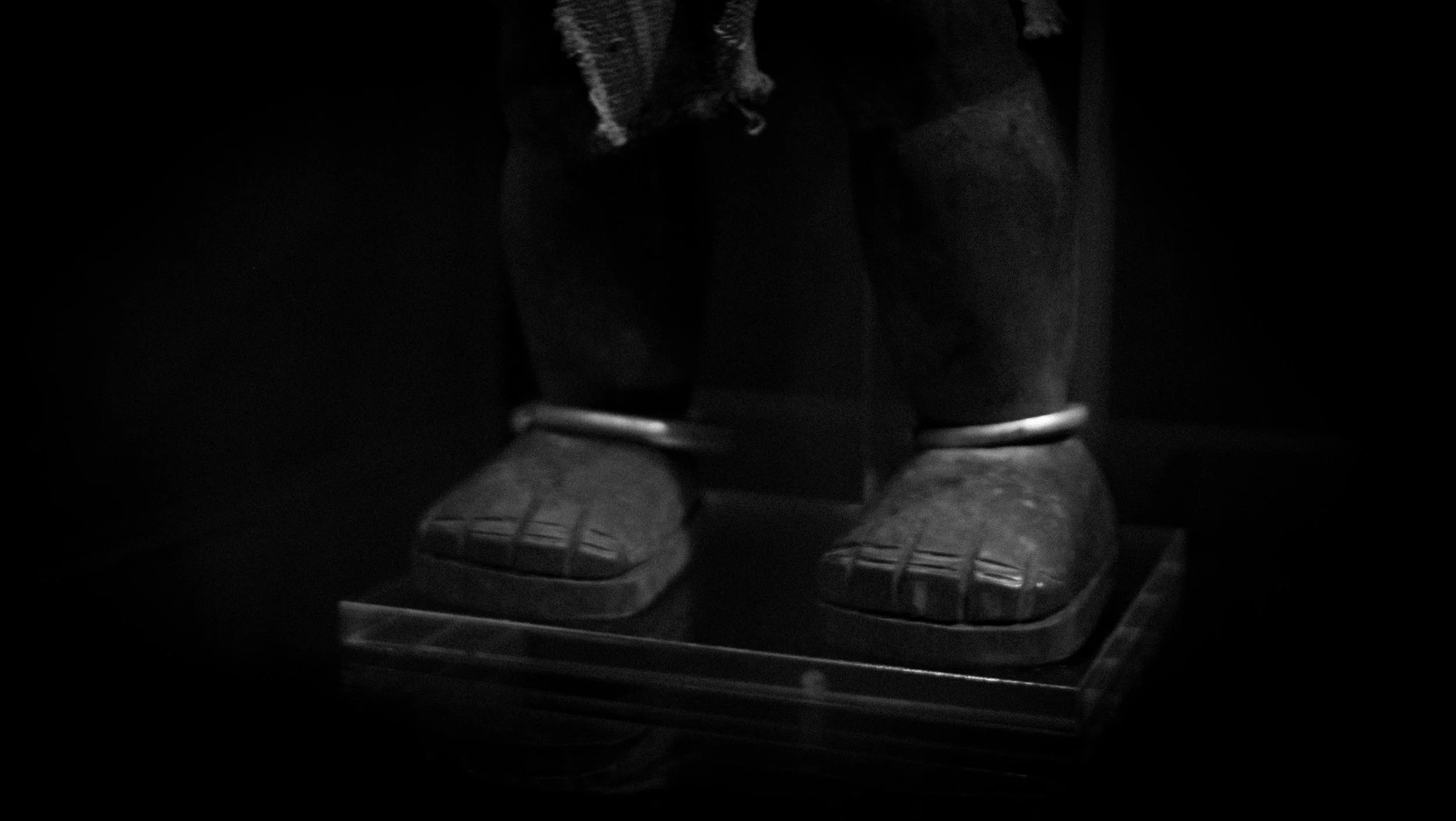
Shackled artifacts, the Humboldt Forum
Screenshots by the author
collage by the author
screencast by the author
Joshua Citarella’s notion of the “Museum of Icecreamification” captures a crucial shift in contemporary museum culture: the transformation of museums from spaces of public knowledge into stages for self-branding. In Citarella’s formulation, the museum no longer functions primarily as a site for reflection or historical inquiry but as an aesthetic backdrop optimized for social media circulation: bright colors, immersive rooms & photo-ready installations replace the slow, demanding work of cultural engagement. This logic doesn’t just reshape museum design; it rewrites the very purpose of the institution, aligning it with platform capitalism’s demand for constant content production. The “Museum of Icecreamification” thus names a broader crisis: when museums become Instagram factories, their critical, educational, and political capacities erode, leaving behind only the spectacle of participation.
screenshots by the author
In the comedy series Seinfeld, George Costanza (proudly) claims to be the architect behind a new addition to the Guggenheim Museum, yet pointedly refuses to set foot inside. Even the architect of the Guggenheim is not much of a Guggenheimer.
To understand and implement the decolonization of museums, the first question we must ask is whether colonialism has actually ended. Colonization of the space is openly discussed and aimed by the tech giants/bros such as Elon Musk while colonial ideology is still active in our planet. UN Vote for the resolution establishing the "International Day against Colonialism in All Its Forms and Manifestations":
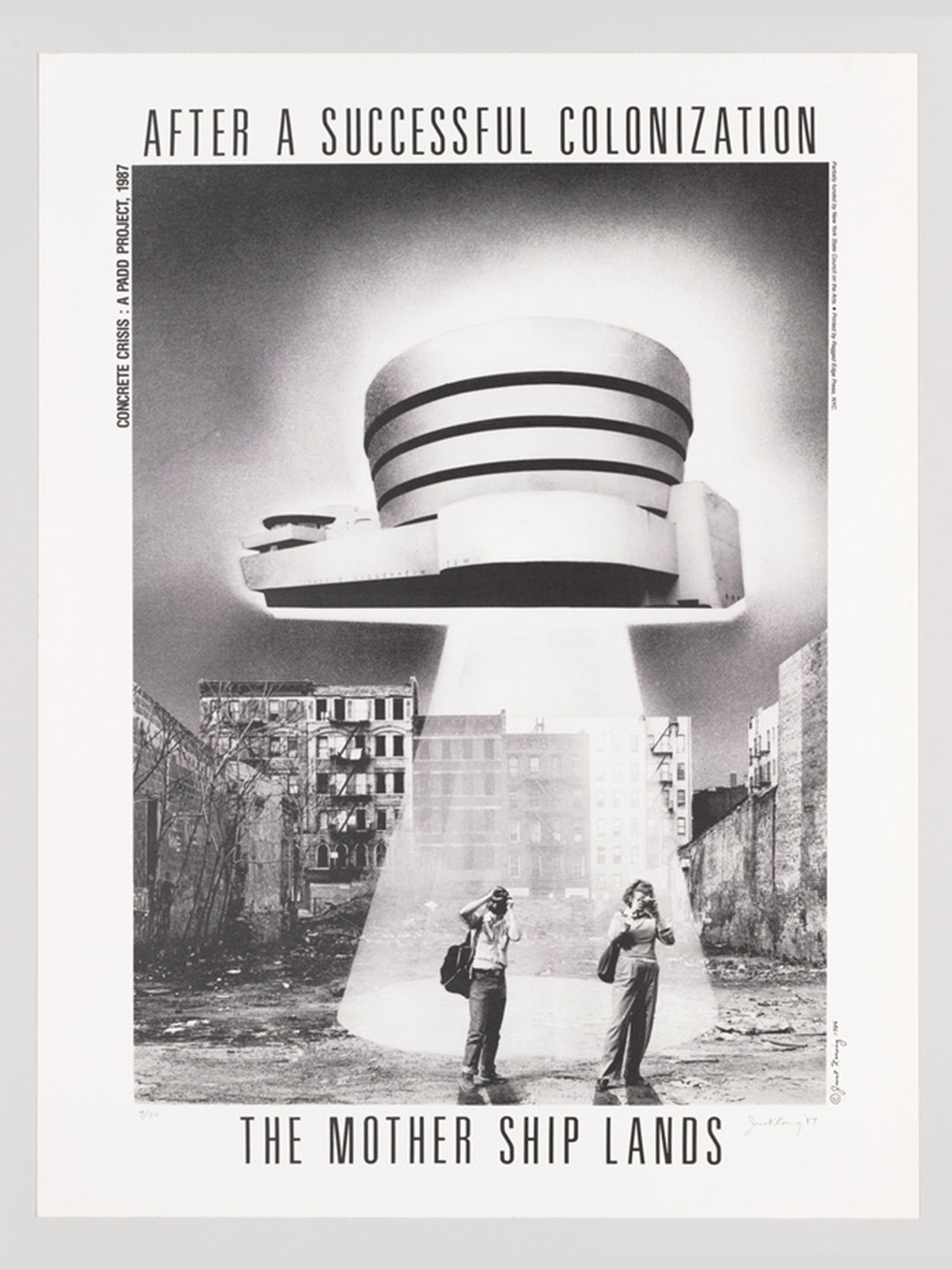
Janet Koenig
After a Successful Colonization,
The Mother Ship Lands
1987
Produced by: Concrete Crisis. Part of the series Concrete Crisis: A PAD/D Project
PAD/D archive
Whitney Museum collection
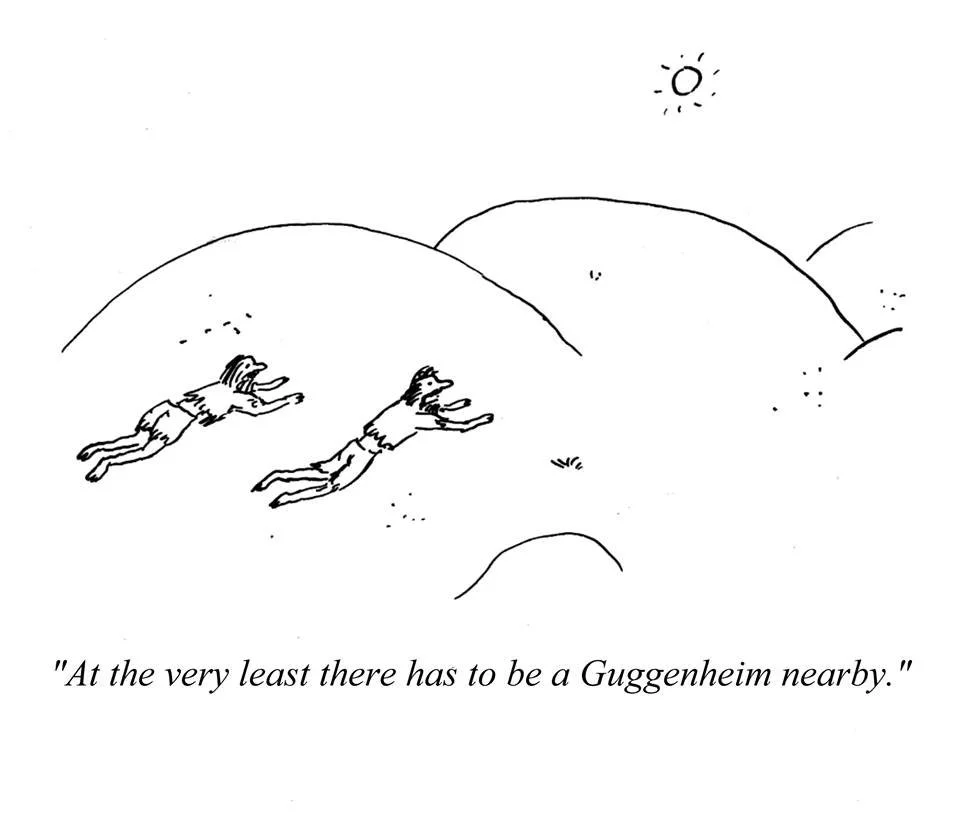
Pablo Helguera
At the very least…
2014
Gulf Labor - “52 weeks” campaing, week 36

photo by Hans Haacke
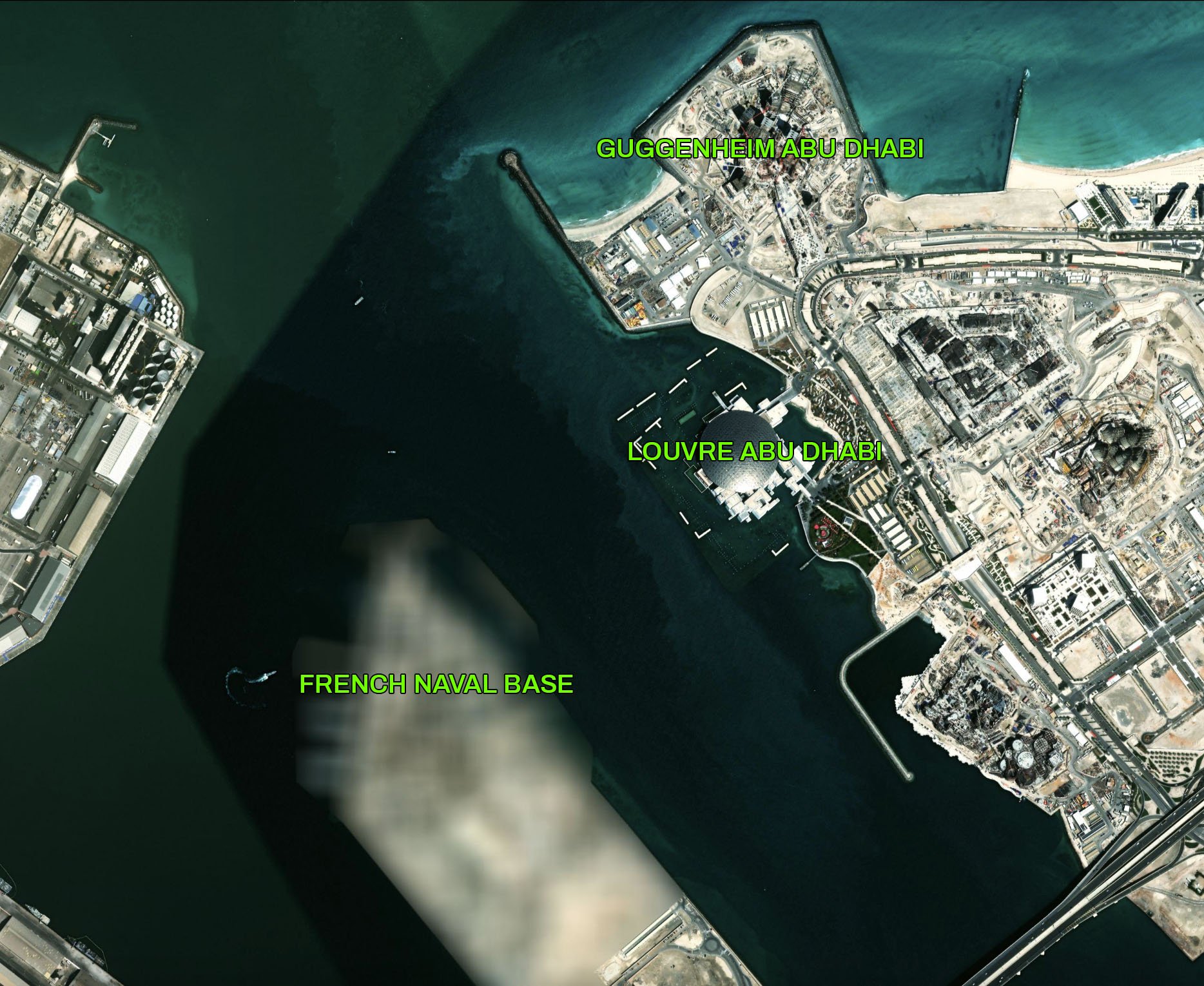
Saadiyat Island, screenshot by the author
“Colonizing Mars”
from The Martian (2015)
screencast by the author

Frances Collins
Oil that Glitters Is Not Gold
1939
The first protest at MoMA originated from within the institution itself. In 1939, Frances Collins, then the manager of publications, distributed a leaflet titled “The Semi-Public Opening of the New Museum of Standard Oil” during the inauguration of MoMA’s new building. The leaflet criticized the exclusion of certain museum workers from the event, highlighting broader concerns about institutional hierarchies. MoMA, like many American art museums, was founded by the Rockefeller family, heirs to the Standard Oil fortune. Notably, the front of the invitation to the opening featured the statement, “Oil that glitters is not gold” drawing attention to the museum’s entanglement with oil capital.
Art Workers’ Coalition
13 Demands
1969
Once, it was the norm and it should still be. But culture was commodified, museums were institutionalized, and eventually, they were fully absorbed into capitalism. Free admission days still exist, but let’s take a closer look at what’s happening to them. Recently, the Berlin Senate canceled Museumssonntag, ending free access to state museums, museums funded by the public. What about private museums? Looking at a global example: MoMA. To their credit, they still offer free admission on Friday evenings from 5:30 to 8:30 p.m., thanks to sponsorship from Uniqlo. Should we be grateful? Perhaps. But let’s not forget that MoMA’s free admission days were not a corporate gift; they were won through struggle. In the late 1960s, the Art Workers’ Coalition forced the museum to open its doors to the working class through protests, occupations, and relentless pressure. Since the 1990s, most major museums’ free admission days have been tied to corporate sponsorship. What was once a right secured through activism is now a marketing opportunity.